
– updated September 2026
In a state of not-knowing, the bliss of nothing gently wipes the slate clean. Thus, when we leave that state, its after-effect is unconditioned engagement.

Those who yearn for self-development and transcendence don’t want the bliss of nothing, because it requires them to stop looking forward to experiencing something and thus become nobody in a state of not-knowing. So they avoid the bliss of nothing by imagining that it will transform them into something better. [Photo: Alexius]
From Duality Hack #9.10 in the free eBook Alexius’ Duality Hacks.
Nothing twisted into something
All our experiences are the brain’s handiwork. It doesn’t even need our eyes open to conjure intense experiences of a world we perceive as outside us. In dreams, it makes us experience sensations like an orgasm without any physical stimulation.
In a mishmash, the brain fabricates our experiences from nothing. When we react to them, they seem to make us real beings in a material, online, dream, or spiritual world, because our reactions make them seem like something.

When you don’t organise thoughts and feelings into specific categories, they lose weight and seem less solid. This lightness then sparks a take-off into the empty breath. [Photo: Alexius]
The empty breath exposes something as nothing
Suppose you want to reveal that the brain’s experiences of something are nothing, whether they appear mundane or spiritual. The most direct path is not to structure thoughts into forms that make nothing seem like something. Then their bare energy sparks a take-off into the empty breath, which is indifferent to the idea of something.
However, it doesn’t make you higher, purer, or more balanced. The sense of being something is part of the brain’s deception, where nothing appears as something, like a mirage in the desert. By contrast, the empty breath is like the clear sky above the mirage, untouched by the illusion and therefore outside the deception.
Hence, since the empty breath gives you nothing but nothing, you slip into a state of not-knowing. In this state, you don’t pick up on the brain’s scam of you as someone in a world of something, because you revel in the bliss of nothing.
This bliss of nothing is sometimes mistaken for Oneness. But Oneness is neither bliss nor nothing nor something. As Oneness moves forward and backwards simultaneously, it remains one perpetual present. See Duality Hack #9.9.

A state of not-knowing
The brain takes just a second to turn nothing into your current experience of something, as if you’re someone in a world defined by time and space. So, to trace your experience back to its origin in nothing, you mentally rewind for a second. Then, entering nothing, you encounter the empty breath, unprocessed by the brain, and this leads you into a state of not-knowing.
Even though the brain’s world of something appears the same in this state, you don’t see it as something because you’re in the bliss of nothing, with no particular place to go or someone special to meet. Note that this doesn’t imply the absence of thoughts – rather, nobody relates to them as if they represent something.
When In a state of not-knowing, the brain can’t establish you as somebody. This doesn’t mean you’re transformed into a higher consciousness – it means there’s no awareness of being a separate entity. This is like air walking on air.
That’s why, in a state of not-knowing, you’re unaware of being nobody until you return to the conscious experience of being somebody, and blissful memories of being nobody surface. So, although a state of not-knowing is impersonal, what Alexius describes is his personal experience, and you may recall it differently.

In a state of not-knowing, your eyes can be closed or open. You may sit in a bar, walk down a noisy street, talk a lot, or be silent. Thoughts continue as usual, for what and where you appear is a construction of thoughts. But there’s one difference. In a state of not knowing, you don’t perceive thoughts as something but as nothing. So you’re in the bliss of nothing, regardless of thoughts.[Photo: Alexius]
How long does a state of not-knowing last
The brain’s ability to establish its experiences as real relies heavily on your constant reaction to them as something. Without this reaction, the brain’s experiences are exposed as nothing, and so is the brain. Therefore, if you linger in a state of not-knowing for more than 20 minutes, at most 45, the brain goes into a coma. This prevents you from returning to the experience of something fabricated by the brain as if you’re someone conscious about being in an external world.
You can’t welcome the Enlightenment of that which is One, if you want to experience something, because awareness of anything requires more than one.
Simply put, you have to exit a state of not-knowing relatively quickly if you wish to resume the conscious experience of being someone. Otherwise, the brain shuts down, and the Enlightenment of that which is One sets in, leaving no memories of something.

A state of not-knowing must end relatively quickly if you wish to return to consciousness of being someone in a world of something. Yet the bliss of nothing delivered by a state of not-knowing is always there – like the sun still shining when covered by clouds. [Photo: Alexius]
Departing a state of not-knowing
There’s no need to worry about staying too long in a state of not-knowing and having consciousness erased by the Enlightenment of that which is One. Few reach the point where the brain stops fabricating experiences in which they appear as a conscious entity experiencing a world of something.
Also, most humans want to make a difference. So they leave a state of not-knowing as soon as the brain tempts them with becoming someone significant, able to influence others with something unique. Even if you reach the point of no return, fear of termination is powerful enough to reboot the brain, bringing you back to the experience of being someone in a world of something.
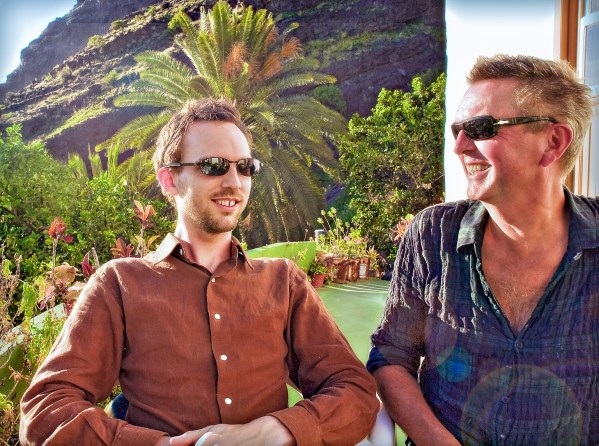
So, it’s up to you to undo the feeling of inadequacy. One way to do this is to enter a state of not-knowing. It wipes the slate clean, so when you return to the conscious experience of being someone, your old patterns have been erased. Hence, you have no urge to live up to others’ expectations.
Alexius, for instance, has no father-son concepts that prevent him from enjoying his son’s company as it unfolds.
But as you return from a state of not knowing to the conscious experience of being someone with the slate wiped clean, you don’t expect anything to turn out a particular way. Hence, you happily serve the brain, and thus everybody, because the brain has no personal preferences.
Serving feels so satisfying that you automatically enter the duality flow (Duality Hack #8.1-9), the ongoing interaction of opposites that forms our experiences. However, sometimes you take a break from duality by entering a state of not-knowing, which is always nearby when you live to serve.
Be aware that when you’re in the duality flow, old sources of pleasure may lose their charm. Satisfaction now comes from the energetic interaction between opposites, not from something specific.

As you glimpse Enlightenment, stick to one aspect at a time. If you feel the glimpses of Enlightenment, don’t try to see them also. But if visions of light naturally take over, follow them until you no longer see patterns and colours but only one bright light. That’s the portal of the Enlightenment of that which is One. Entering it, your consciousness is erased. Hence, there’s nothing to gracefully float through a black hole (Duality Hack #10.5) into that which is One. [Photo: Alexius]
Glimpses of Enlightenment in a state of not-knowing
In a state of not-knowing, you might catch glimpses of the Enlightenment of that which is One. But like a movie trailer previews a film without being the film itself, these glimpses are only hints, not the Enlightenment of that which is One. We can’t experience it because awareness of anything implies separation, and Enlightenment is beyond division.
Yet we can see, hear, feel or taste glimpses of the Enlightenment of that which is One. As we do so with inward-facing consciousness while still in the world of outward-facing consciousness, those glimpses of Enlightenment, like augmented reality, are layered atop the world we experience through the outward-facing consciousness without altering it. See Duality Hack #3.3.
Actually, visual glimpses of the Enlightenment make it harder to see the world of outward-facing consciousness. Likewise, audio glimpses of Enlightenment as celestial music, with its sublime polyphony, make everyday sounds fade into the background. So set aside such glimpses when tasks demand your full attention in the world of outward-facing consciousness

Most are unwilling to undo the belief in more than one. However, if you acknowledge this unwillingness, you confirm that experiencing more than one is make-believe. Hence, you establish a willingness to undo that belief. Such a shift doesn’t mean you’re suddenly transformed, reborn or awakened. The story of Santa Claus stayed the same after you stopped believing it. What changed was your perception – you no longer saw it as real. Likewise, when the belief in more than one is being undone, only your perception changes. However, there’s one difference between having the belief in Santa Claus and in more than one undone. When the belief in the latter is being undone, you aren’t disappointed. Instead, you feel at ease, free to explore the illusion of more than one.
You start from the ground up after a state of not-knowing
As mentioned, you must leave a state of not-knowing after 20 minutes, at most 45, if you want to return to the conscious experience of being someone in a world of something. When you come back from a state of not-knowing, you start from the ground up, stretching the body with no purpose other than to fine-tune it for a world of something.
You stretch like a cat – naturally, without coordination or conscious breathing. To onlookers, it might look as if you’re practising a formal system, such as Tai Chi. This misconception leads them to believe that if they focus on systematically mimicking your movements, they’ll magically attain a higher state of being. However, a state of not-knowing doesn’t come from a system or from being focused, but from being defocused. Nor is a state of not-knowing a higher state of being. On the contrary, you’re nobody in a state of not-knowing.
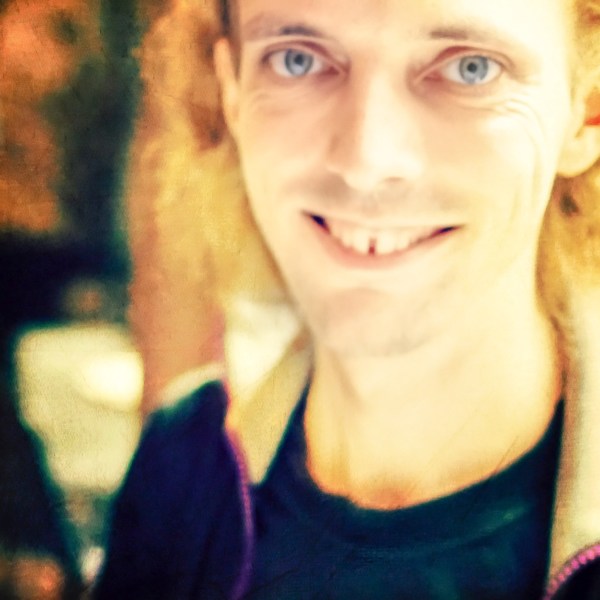
When you leave a state of not-knowing, you’re nobody pretending to be somebody. Consequently, you no longer cling to relationships for validation as somebody. So, with nothing to prove or lose, you can fully enjoy relationships as they unfold in the present moment. [Photo: Alexius]
In the after-effect of a state of not-knowing, everything is effortless
While the after-effect of a state of not-knowing lasts – whether for a split-second or years – your default response to the brain’s duality experiences is twofold. Thus, in sync with the brain’s duality fantasy, every instant feels fulfilling (page 215). However, the moment you entertain the idea that your experiences could be better, complications arise. It’s not you but the brain that forms the experience of a world in which you appear as a separate being. See Duality Hack # 8.9.
Put simply, when you are in sync with the brain’s experiences, you feel complete. Nothing feels wrong or missing. But if you try to edit the experiences according to your conditioned notions of fairness, you’re out of sync with the brain. Consequently, something always seems wrong or missing.
Fortunately, if you don’t try to fix the frustration this entails, its unbound energy sparks a take-off into the empty breath, bringing about a state of not-knowing that wipes your slate clean. Afterwards, you are again in sync with the brain’s experiences, so you feel fine regardless of appearances.
During a state of not-knowing, the empty breath syncs being nobody with being somebody, so a world of something is seen through the lens of nobody. It also syncs being nobody with being somebody in the after-effect of a state of not-knowing, because it never forgets you and provides continuous support.
However, the sync ratio is different in the after-effect. For instance, you forget nothingness when you need to drive a car, but it shows up when you’re asleep. In short, in a state of not-knowing, you’re mainly nobody, and in the after-effect, somebody.

You may shift many times between the conscious experience of being someone and a state of not-knowing before you forget to leave a state of not-knowing, thereby welcoming the Enlightenment of that which is One. [Photo: Alexius]
The frustration of something versus the bliss of nothing
You don’t consciously notice the transition from a state of not-knowing to awareness of being someone, because there’s no sense of an ‘I’ in a state of not-knowing. Nor do you notice that the bliss of nothing has wiped the slate clean. However, this has lifted your psychological projections onto your body and the world, so you feel light and free, relieved of the need to conform to a specific belief system for self-realisation and improvement or to change the world.
This doesn’t necessarily mean it will continue that way. Your conditioned reactions may be so firmly established that you revert to a familiar response pattern, leaving the bliss of nothing for the frustration of something. Still, this frustration can serve as fuel, launching you back into the empty breath. Once again, the bliss of nothing wipes your slate clean, and you return to the consciousness of being somebody unconditioned.
Yet your old conditioned reactions may take over again, leaving you frustrated, until you no longer hold back that frustration but instead use its unbound energy to spark a take-off into the empty breath, replacing the disappointment of something with the bliss of nothing.
Alexius’ Duality Hacks do not result in something but nothing, thus hacking the belief in something.
You’ll likely find yourself repeating this cycle many times. However, each repetition is a step forward. Each time, you’re getting closer to the point where you no longer perceive anything as something unique. Thus, not in the frustration of something but in the bliss of nothing, you eventually welcome the Enlightenment of that which is One, erasing every notion of duality. So even though this cycle may seem repetitive, you’re on a non-linear path to non-duality.

Ways to enter a state of not-knowing with the bliss of nothing
All Alexius’ Duality Hacks, except the Enlightenment of that which is One, eventually bring you into a state of not-knowing:
- FEELING RESTLESS. Don’t soothe yourself with meditation or television, but step into the unbound energy of restlessness. This sparks a take-off into the empty breath, bringing you to a state of not-knowing (Duality Hack #9.1-3.).
- FEELING LAID-BACK. Perceive your reaction to your experiences as ‘Dunno what it is’ to slip into a state of not-knowing (Duality Hack #6.5).
- FEELING TIRED. Pretend to be what you feel. As you’re not what you pretend to be, you are in a state of not-knowing (Duality Hack #2.1-5).
- BLAMING THE WORLD FOR EVERYTHING UNPLEASANT. Perceiving troubles as symbols of Oneness, you enter a state of not-knowing (Duality Hack #3.1-8).
- NOT LOOKING FOR SOMETHING, you’re in the bliss of nothing.
- BEING ALONE-TOGETHER (Duality Hack #12.1-4), separation fades, leaving you in the bliss of nothing.
Be aware that Alexius’ Duality Hacks aren’t about healing the body but about undoing the mistaken belief that we are inside it. That said, the more our belief is undone, the more the body is freed from our mental grip. Hence, the biological system can fix the body materially. See Duality Hack #7.

When you withdraw from a state of not knowing, negative thoughts pop up as before. Yet, in the after-effect of a state of not knowing, you’re naturally in the duality flow. So as negativity interacts with positivity, you feel whole, and negativity loses its grip. [Photo: Alexius]
The duality flow
If you accept twofoldness as the natural expression of dualism, you’re aligned with duality. However, most people shun being dual, instead trying to be one fixed identity. For instance, to appear solely happy, they suppress their sadness. But without sadness as a contrast, happiness becomes an intellectual concept, leaving them disappointed.
Thankfully, if you don’t suppress your disappointment, its uncontrolled energy sparks a take-off into the empty breath. This entails a state of not-knowing, which wipes your slate clean. Thus, returning to the consciousness of being someone, you are in the duality flow. Here, opposites, such as happiness and sadness, collaborate to make you feel complete.

We go back and forth between the excitement of something and the bliss of nothing
until we realise that this excitement inevitably leads to the frustration of something. [Photo: Alexius]
Epilogue
Parents may take their children to the beach to relax as a family. But usually their kids aren’t interested in relaxing there. Instead, they take pleasure in building castles in the sand, forgetting their parents and happily playing with them all day as if they were real.
In the same way, when the empty breath invites us to the bliss of nothing, most prefer to build castles in the air, treating these illusions as something rather than nothing.
Just as children one day automatically stop building castles in the sand, grown-ups too will inevitably realise that their castles in the air are an illusion. When they recognise this, they are ready for the bliss of nothing. Since time itself is an illusion, there’s no need to hurry this process. When your dreams of ‘something’ are played out, they naturally give way to the bliss of nothing.
Leave a Reply