
– updated August, 2026
Just as artificial intelligence generates images from its database, our brain constructs our experience from its database. When we respond to them, we appear to exist as someone in a world enclosed by time and space, though the formlessness of Oneness is all there is.

The brain claims our experiences are built from the frequencies it detects through the eyes. We choose to believe this to avoid realising that all experiences, mundane as well as spiritual, are nothing, which the brain twists into something.
Duality Hack #1.2 from the free eBook Alexius’ Duality Hacks
Digital photos consist only of zeros and ones, yet they appear in many ways. This is because an app interprets various combinations of zeros and ones as different images. In the same way, the brain interprets empty space as many kinds of appearances.
What we perceive as reality is the brain’s fantasy
An analogue camera records images directly onto film. But a digital camera works differently. It does not record images itself. Instead, it captures the RAW data of the light the lens is set to register when the shutter is pressed.
But this RAW data does not immediately become an image on the camera’s screen. First, a built-in app turns the RAW data into contrasting elements, forming a world of time and space. Most apps do this by turning RAW data into a JPEG file, which then appears on the screen.

When a smartphone recognises your face, it doesn’t perceive you as a physical being but as a collection of electrical impulses. In Apple’s case, it detects these impulses from a grid of 30,000 invisible dots projected onto your face, creating a 3D map of your facial topography that the phone then uses to identify you through its software.
The brain fabricates every experience from nothing, whether awake, asleep, or meditating. It does not distinguish between your experiences and others’, nor between real and imaginary, physical and spiritual. The same organ constructs everything, ignoring human notions of fact, coherence, and efficiency. Its sole function is to fabricate stories, limited by time and space, so captivating that we forget that reality is the formlessness of Oneness.
As with a digital camera, the light frequencies that reach our eyes aren’t turned into images. But unlike a digital camera, the brain doesn’t convert the raw sensory input into something resembling a world confined by time and space. This is because our eyes see only empty space, so the brain has nothing to work with (see page 26).
Nevertheless, the brain claims that our experiences come from the information it receives from our eyes. Thus, it can hide that it makes our experiences out of nothing and turns them into something.
This explains phenomena such as vividly ‘seeing’ images with closed eyes, experiencing a missing limb as if it is still present, having an orgasm in dreams – or some individuals claiming to perceive deceased people or future events.
The brain easily convinces us that our experiences are assembled from sensory data because if we don’t believe it, we reveal that we’re the brain’s fantasy.
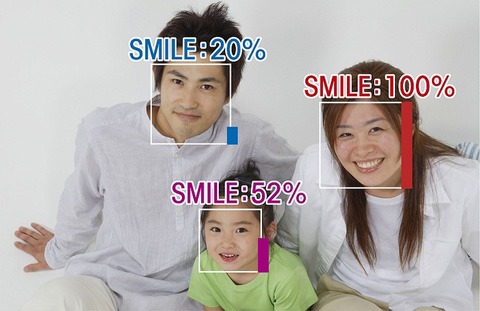
»The app helps people who are blind or losing their sight to ´feel´ smiles. The app uses facial recognition to find a face and then vibrates in the user’s hand to let them know that the person they’re talking with is smiling.« From an article in Wired.
The person you believe yourself to be is blind, deaf, and numb. Whether spiritual or mundane, what you see, hear, and feel are electrical signals in the brain. They have no inherent meaning unless the brain processes them into something you interpret as significant, such as a smiling face.
The brain fabricates the present
While we cannot change the brain’s fantasy world of nothing turned into something, we’re free to choose between going right or left, for instance. But, like in a video game, the actions that follow our decision are determined. Yet, it still takes time for the brain to construct our experience as scripted. However, since this processing delay is extrapolated, you are unaware that the brain has taken one second to fabricate what you believe you are experiencing now.
Think about blind people using Facebook. AI acts as their ‘eyes’. When they activate a picture of a pizza, for instance, the AI immediately generates an audio caption saying ‘pizza’, helping them visualise a pizza after a slight delay. This example shows the same processing delay in a more practical context.
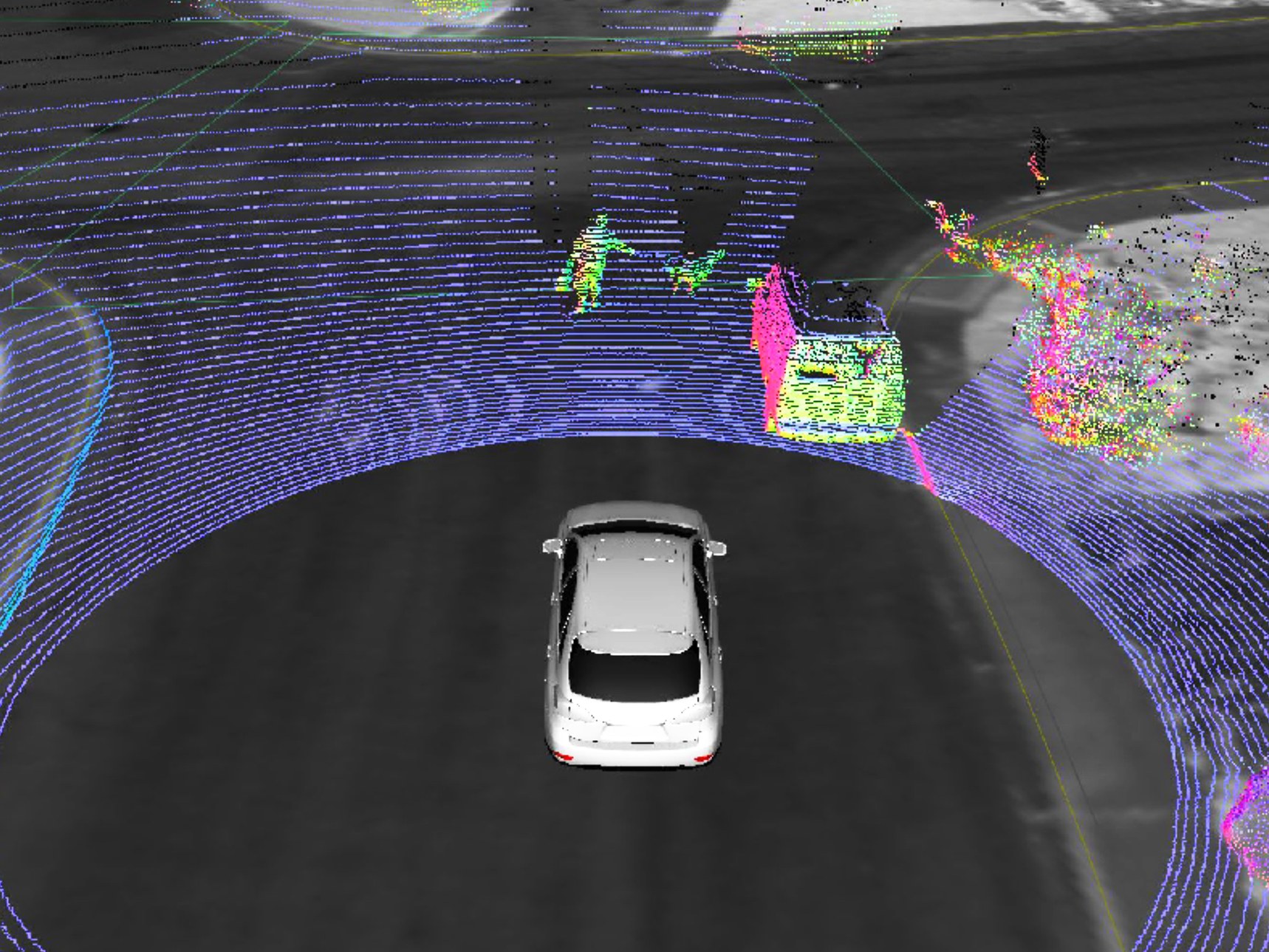
What humans and self-driving cars ‘see’ is constructed by their master – the brain for humans, the internet for cars. As shown in this internet-sourced image, the self-driving car’s view differs from what the brain makes you ‘see.’ [The images are from the internet]
However, blind people cannot know whether artificial intelligence is accurate. Nor do they, or others, understand that the brain never gets it right because reality is One and experience requires more than one.
Often, those willing to accept that all experiences are fictional argue that a higher power has initiated the fiction, making experiences real on a higher level. But since it takes more than one to set something in motion, everything created is make-believe.

Since a chicken does not speak different languages, it makes the same sound worldwide. However, the brain makes us perceive that sound differently across countries.
We neither see nor hear anything real
In Hindi, everyone perceives a rooster’s call as a mighty Kuk-rook-koo. But in German, you hear a spirited Kikerikie. In Tagalog, people hear a melodious Tik-tila-ok. In French, they hear a drawn-out Cocoricooooo. Sweden prefers a brisk Kuckeliku. East-End vernacular opts for a succinct Kay-Eff-See, Spain chooses a rapid-fire Kiri-kiri-ki, and for Alexius, who was raised in Denmark, it’s the familiar Kykliky.
No matter how we pronounce a rooster’s call, it remains as meaningless as these English words. We neither see nor hear this language, nor any other. What we actually experience is empty space, which our brain presents as though it contains meaning.
Leave a Reply