
– updated August, 2026
Our experiences are formed by the brain to make us believe we’re substantial beings in a world limited by time and space. Yet nothing is tangible, because oneness is formless and thus endless.

Duality Hack #1.1 from the free eBook Alexius’ Duality Hacks
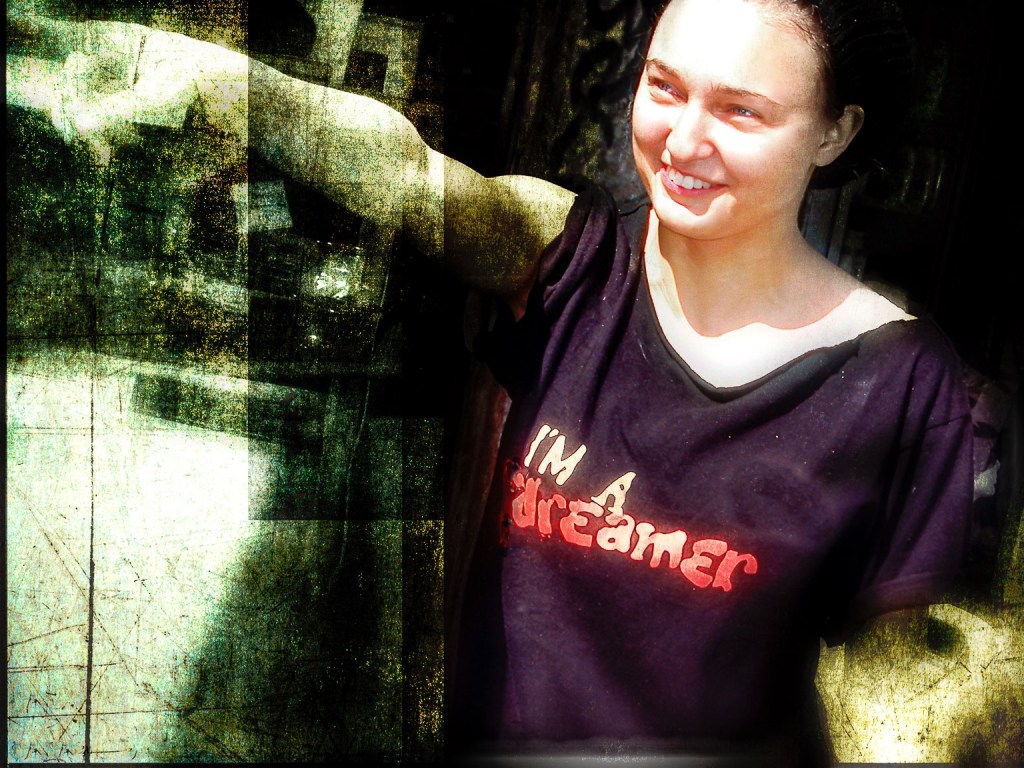
The woman you see on the previous page is not actually there. She’s a simulation – a collection of tiny pixels assembled into a shape we collectively identify as a woman. But since Oneness is formless and therefore endless, perceiving anything definable – whether in cyberspace, the physical world, or the spiritual realm – is an illusion fabricated by the brain. What seems like something real is actually a brain-made experience built from nothing to appear as if it’s something.
However, the brain doesn’t weave this illusion to deceive us. We have tasked it with generating experiences of a world defined by time and space to conceal that there’s nothing but the formlessness of Oneness.
This is not a factual explanation but a metaphor. It serves to illustrate the incomprehensible: that we appear as separate beings in a world limited by time and space when, in reality, there is only the formlessness of Oneness.
∞∞∞∞∞∞∞∞
It takes more than one to discover something, yet there is no more than One, for it is formless and thus endless. And since it takes more than one to write or read this, no one does—just as no one moves within a game’s virtual realm.
However, we can pretend to be somewhere we are not. This is not about authenticity, truth, or transformation, but about enjoying role-play in a virtual amphitheatre. Unfortunately, many mistake the virtual world for reality and see themselves as authentic beings within it, leading them on an endless pursuit of validation rather than simply enjoying their role in the game of more than one.
Fortunately, Alexius’ Duality Hacks undo the belief that you are in a world with more than one. However, they don’t do this by pointing to Oneness – it’s impossible, as that requires more than one. But since you believe in more than one, they can point out that the brain processes those experiences to hide what cannot be experienced: that which is One.
As mentioned, the brain does this because you have asked it to help validate you as someone unique in a world with more than one. Consequently, it’s not the brain’s thought construction of a world with more than one that needs correction, but the belief in more than one.
∞∞∞∞∞∞∞∞
You cannot demonstrate that the experience of a world with more than one is false. Reality is Oneness, and it needs more than one to prove anything.
∞∞∞∞∞∞∞∞

Imagine you see a particular tree as magical, so you hug it for a long time, hoping for a mystical transformation. But all you get are stiff arms, so you end up disappointed and demand that the tree set you free.
However, the tree has not imprisoned you. You chose to hold on to it, believing it contained something that would make you more insignificant. Yet holding onto the tree only results in pain, so you realise that its supposed magic is make-believe.
The tree symbolises a world with more than one. It offers nothing, since reality is that which is One, and it takes more than one to possess something. But we cling to the illusion of more than one until we see that it is make-believe.
∞∞∞∞∞∞∞∞
Seeking a deeper understanding by delving into something is pointless when it comes to Oneness. It’s formless and therefore without depth. Hence, such pursuits only serve to hide it.
∞∞∞∞∞∞∞∞
The undoing of the belief in a world with more than one does not result in something. You neither become more nor less because that which is One is all there is.
∞∞∞∞∞∞∞∞
Undoing the belief in separation does not result in awakening, stillness, ‘I am that I am,’ or mystical states. Producing a result requires separation, so nothing comes of undoing separation.
∞∞∞∞∞∞∞∞

Science states that the world we believe we experience is made up of 99.9999999% empty space. The remaining part, although also empty and insubstantial, is what we perceive as substantial elements. Consequently, our appearance as definite beings in a physical world is make-believe.
Recognising that all appearances are illusions doesn’t alter our experience of them. Instead, it shifts our perception, making everything seem like a computer simulation rather than a genuine reality.
∞∞∞∞∞∞∞∞
The smartphone’s triumph rests in its ability to make us forget that we’re interacting with a screen. It convincingly presents the illuminated pixels as tangible objects in the real world, subject to our manipulation. In other words, the smartphone has succeeded in imitating the brain. Out of empty space, the brain fabricates experiences of something which feels substantial when we respond to them.
∞∞∞∞∞∞∞∞
The substantial entity you believe in being is exposed as a construct of thoughts if not confirmed as tangible by other constructs of thoughts.
∞∞∞∞∞∞∞∞

Quantum physics holds that something exists only when observed. Thus, if it is not witnessed, it does not exist. The world operates on this logic. For instance, in a court case, only what someone else verifies is accepted as true.
This is why we interact socially, internally or externally, to substantiate others who, in turn, confirm our existence. It works best when we feel approved by a group considered superior to others. At such moments, we feel special and more alive. Yet, since our affirmers exist only in our thoughts, our existence is a construct of thought.
∞∞∞∞∞∞∞∞
We don’t choose our actions. We compulsively express the signals we receive, much like a radio that picks up and plays music from a distant station. But who originates those signals?
The brain, operating in a world perceived as governed by time and space, fabricates the signals we express. Yet these signals are made from nothing to appear as something. Consequently, our actions are make-believe.
∞∞∞∞∞∞∞∞
No one is what they appear to be, not because their real self lies beneath the appearance. There’s no self, soul, or anything else that requires more than one, because there’s no more than that which is One.
∞∞∞∞∞∞∞∞
Most people with alcohol disorder only accept a cure for hangovers if it doesn’t involve removing the cause: alcohol. Similarly, those who believe in a fixed identity and seek to end suffering this belief entails are unwilling to eliminate the root of their misery: the belief that they are someone definitive.
∞∞∞∞∞∞∞∞
Living in a cold country, you may yearn for tropical warmth. But dressing lightly, drinking cocktails, singing foreign songs, or changing your name won’t let you feel the tropics’ heat. Similarly, you don’t uncover Oneness by chanting, wearing unique clothes, or using exotic names. You don’t reach it by doing more, but by undoing the belief in more than one.


Leave a Reply