
– updated August, 2026
Inclusion neutralises apparent differences, thereby undoing the belief in a world divided by time and space.

Duality Hack #4.4 – from the free eBook Alexius’ Duality Hacks.
Coming from the heart has nothing to do with spirituality
Many know our dreams are fantasies the brain makes, unfolding within it. Few, however, know this also applies to the world we experience when awake.
Because the brain’s fantasy world is split in two, it expects a twofold response that confirms we are somebody in its setup. So if we try to suppress hate and force only love, we ignore that setup and end up feeling cut off. But if we accept that all experiences come in pairs of opposites, their interaction makes us feel complete within the brain’s duality model.
If we fully include both opposites in a contrast, such as love and hate, the intense energy their meeting entails cancels out their meaning. So, although you still seem to be part of the brain’s duality fantasy, you’re beyond the brain’s domain, in a state of not-knowing.
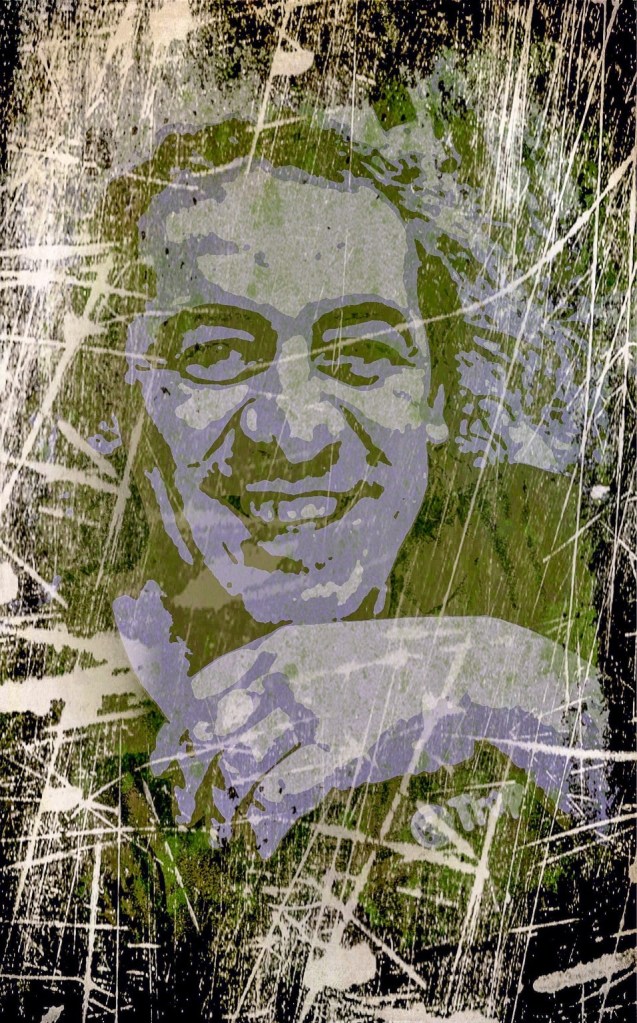
When you, out of habit, suppress what you judge as bad to feel good, you censor the moment and thus feel disconnected. However, if you include being manipulative, you’re in the moment as it is, and so you feel connected. [Photo: Alexius]
Inclusion undoes the belief in separation
If you don’t exclude feeling upset by blaming others for causing it, but instead include this feeling as yours by being nothing but upset, then there are no other feelings to define you as upset. Hence, since you’re empty, you’re in the bliss of nothing.
Blaming others for feeling irritated is only possible if you believe in separation, which is the cause of irritation.
This also applies to comfortable feelings you justify as arising from something external. For instance, when you assume your spouse causes the love you feel, you disassociate yourself from the love within you. Therefore, because it feels as if something is missing in you, the love you assume your spouse causes inevitably leaves you frustrated. On the other hand, if you include the feeling of love as yours by being nothing but that, nothing remains to define you. So, you’re in the bliss of nothing rather than in the frustration of something.
However, it takes more than one to include something, and there’s no more than that which is One, so inclusiveness is as illusory as exclusiveness. Fortunately, unlike exclusiveness, which reinforces belief in more than one, inclusiveness undoes that belief. Thus, if you include everything, nothing seems to obscure Oneness.


Then, you can include it within yourself and enter a state of not-knowing.
In this state, you’re friends with everybody because you’re nobody. [Photo: Alexius]
To include is to undo the past in the present
One of Alexius’ cats, Guinevere, has a strong territorial instinct. So when a foreign cat unexpectedly appeared in their home, she reacted with fear and anger, fleeing in panic. When she returned, she was at ease until she realised the trespasser was still there. Then again, Guinevere fled in fury.
Even though the stranger was gone by the time she returned, she was still upset. She desperately searched for traces of the intruder’s scent to justify her anger. Each time she found some, she let out a furious scream to show Alexius how deeply the outsider had wounded her.
Maybe she assumed her anger would reach the foreign cat and drive it away. Yet her rage remained inside herself, trapped in an internal hurricane.
Guinevere’s attempts to drive away any newcomer may come from an ingrained fear of being replaced, a worry rooted in her past experiences with the people who abandoned her on the streets as a newborn. Yet Alexius cannot know what motivates Guinevere, and she’s probably unaware of it herself.
This example shows that we do not need to know why we react as we do. Nor do we need to examine the past to uncover old patterns. Instead, we simply include our present pain by being nothing but that. Without any other feelings to define it, the painful story about our past dissolves.


Alexius includes his bullshit
Years ago, Alexius was trapped in an almost impenetrable part of a rainforest for two days without food or water. Despite the odds, he persevered, trying to find his way out by following a dried-out river down the mountain.
He often had to dig through bushes with thorny lianas tightly woven together, ripping his clothes and leaving him bleeding. Each patch of thorny lianas took about half an hour to cross. By contrast, on a typical path, he could have covered it in two minutes, in a laid-back fashion. His endless troubles made him feel like a victim of the rainforest. So he grew angry at the forest and failed to see its beauty, feeling locked within it.
In the TV show Man vs. Bee, Rowan Atkinson tries to get rid of his rage by correcting something outside him instead of simply including his despair.
That was until he realised he was not imprisoned by the rainforest but by his own perceptions. Next, he instinctively included the feelings he was projecting onto the rainforest and felt free within its immense beauty.
In other words, when Alexius included his own shit rather than projecting it onto the forest, the experience of every moment shifted. Each moment – including those spent struggling in darkness with thorny lianas – became the perfect moment. But this wasn’t a gradual, intellectual process. Instead, a sudden emotional shift caught Alexius off guard and made him burst out laughing.

Perceiving every moment as the perfect moment mirrors Oneness
Alexius’ rainforest adventure shows that when we do not exclude, and thus automatically include, our feelings about the present moment, we enter a state of not-knowing.
In this state, there’s nobody to deem the world’s apparent differences as making a difference. So, when a helicopter whisked Alexius up from the rainforest at the end of the second day, he perceived the moment as perfect, as if he had died in the rainforest.
But you don’t have to go through the same dramatic events as Alexius to reach a state of not-knowing and see every moment as the perfect moment. When you feel trapped, fully acknowledge this feeling rather than avoiding it or trying to fix it. Being nothing but trapped leaves nothing to define you as trapped. Thus, in a state of not-knowing, nobody can judge something as wrong or missing. Consequently, every moment is the perfect moment.
In short, if you don’t avoid the present moment’s perceived unpleasantness but include it fully, the psychological burden of the moment vanishes. Therefore, every moment is the perfect moment. Since this reflects the reality of Oneness – one perpetual present – the limitations of a world bound by time and space no longer entail tension.
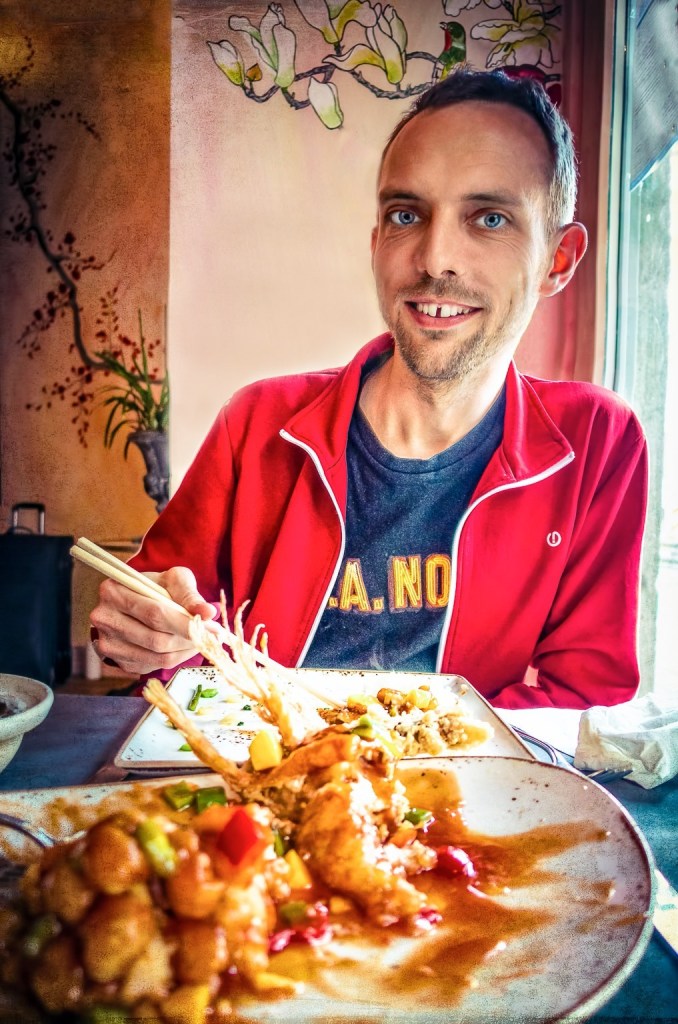
To be inclusive means including your reaction to the present moment unedited. You look at thoughts and feelings as they pass until they reach their end. It takes no time because thoughts and feelings are fleeting when you don’t suppress them to fabricate the moment according to your conditioning. [Photo: Alexius]
Including the present is easy
It’s straightforward to include your experience of the present moment, unedited. For instance, if Alexius’ son in the image on this page doesn’t notice the Chinese wallpaper, he doesn’t include it. And if he doesn’t look at the Chinese food but instead indulges in childhood memories, he includes his reaction to the thoughts and feelings that arise from those memories.
In short, because his present moment consists of childhood memories formed by his culture, he includes his reactions to them, whether pleasant or unpleasant. If he later becomes aware of the Chinese surroundings and is amazed by the new impressions, he includes his feelings about them. If he and Alexius discuss Chinese cuisine, he includes how it makes him feel.
By being all-inclusive, Alexius’ son enters a state of not-knowing during dinner with his dad. As mentioned, in this state, you’re not somebody, so nobody perceives appearances as making a difference. Thus, every moment is the perfect moment.

Being inclusive undoes separation. For example, if you include your response to your lover’s behaviour, you do not need to blame your lover for how you feel. Hence, you do not feel separated.
Instead of cancelling out contrasts one by one, you can speed up undoing the belief in separation by including the most fundamental contrasts: expansion and contraction, right and wrong, or grown-up and childish – or less fundamental contrasts like past and future, giving and receiving, high and low. For example, if you feel nothing but right, there is no wrong to define you as right. Hence, separation falls apart.

Leave a Reply